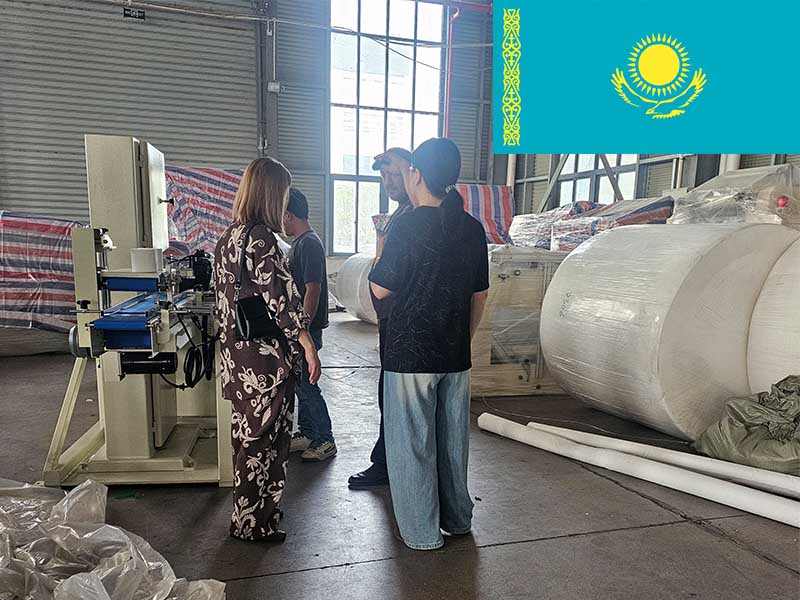
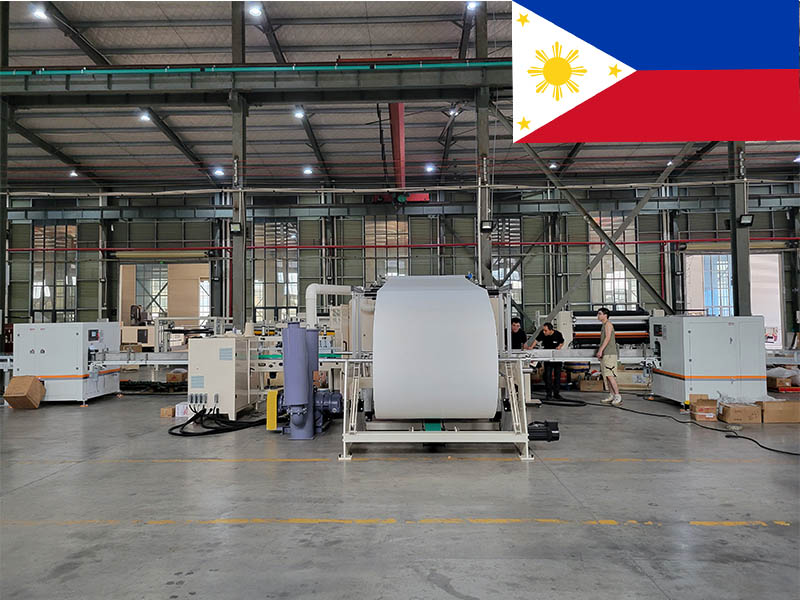
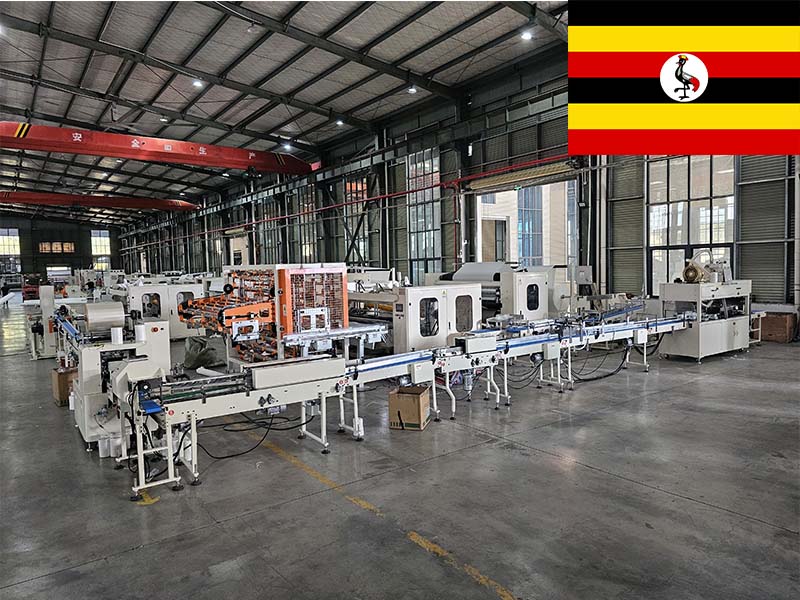
Hand Towel Machine Production Line:
1. Introduction
In the modern hygiene and hospitality industries, hand towel machines have become essential equipment for producing high-quality, absorbent, and durable paper towels. These production lines efficiently convert raw materials such as virgin pulp, recycled paper, or wet-strength tissue into standardized finished products for hotels, restaurants, offices, and public restrooms. With growing demand for eco-friendliness and customization, hand towel production lines are evolving toward intelligence, energy efficiency, and multi functionality. This article provides a systematic introduction to core components, technological types, and innovation trends, offering insights for industry practitioners.
2. Key Components of a Hand Towel Production Line
2.1 Parent Roll Unwinding & Slitting System
-
Function: Unwinds large-diameter parent rolls (typically 1,000–1,400mm) and slices them into specified widths (e.g., 690mm).
-
Technical Highlights:
-
Equipped with tension control and pneumatic web guiding systems for ±0.5mm slitting accuracy.
-
Supports high-speed unwinding (up to 400 m/min) to minimize downtime.
-
Application: Ideal for large-scale standardized production.
2.2 Embossing & Patterning System
-
Function: Forms diamond, wave, or other patterns on the paper surface using steel-to-steel embossing rollers to enhance softness and absorbency.
-
Technical Highlights:
-
Adjustable embossing intensity (50–100 N/cm²) to suit different material requirements.
-
Supports custom pattern designs for premium market differentiation.
-
Application: Hotels, catering, and other high-quality-demanding scenarios.
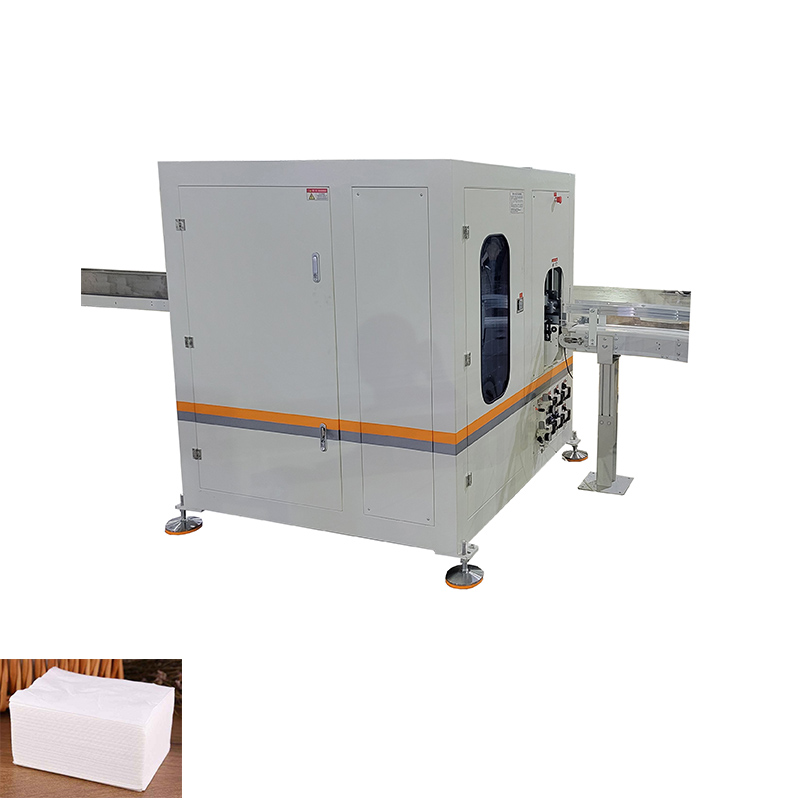
2.3 Folding & Cutting System
-
Function: Folds the paper into N-, V-, or Z-shapes and cuts it into standard sizes (e.g., 230×230mm).
-
Technical Highlights:
-
Vacuum-assisted folding technology ensures ±1mm folding accuracy.
-
Servo-motor-driven cutters achieve 600–800 cuts per minute.
-
Application: High-capacity production lines (over 500,000 pieces per shift).
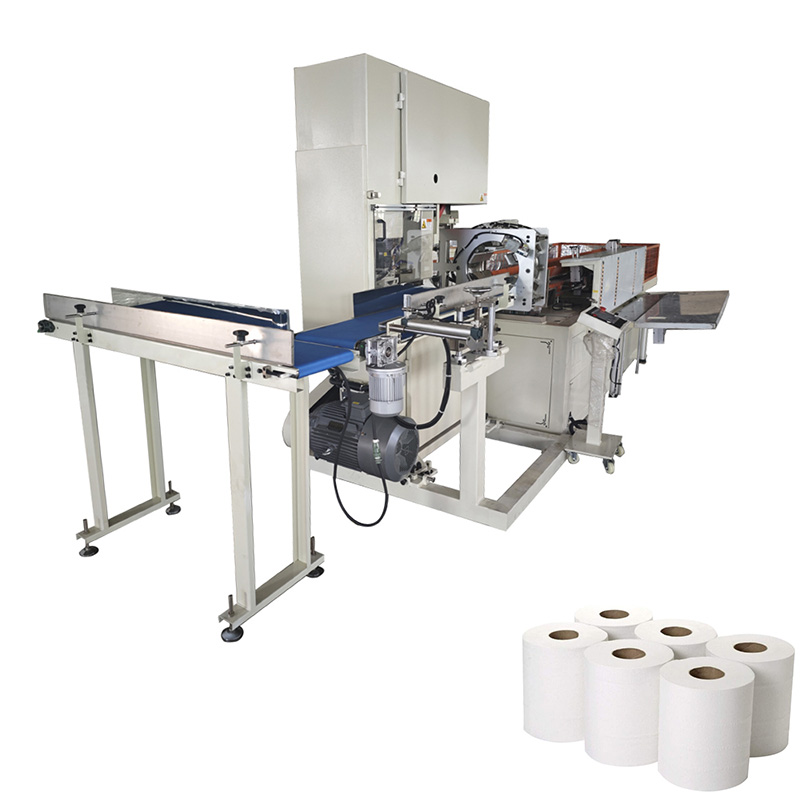
2.4 Counting & Packaging System
-
Function: Automatically counts and stacks finished products, then packages them using hot-melt adhesive or plastic bags.
-
Technical Highlights:
-
Photoelectric sensors ensure <0.1% counting error rates.
-
Supports multiple packaging formats, including single packs and multi-packs.
-
Application: Fully automated large-scale production.
3. Types of Hand Towel Production Lines
3.1 Semi-Automatic Lines
-
Features:
-
Requires manual intervention for slitting, folding, and other steps.
-
Output capacity: 200–400 pieces/min.
-
Low initial investment (12,000–20,000).
-
Application: Small-to-medium enterprises or customized production.
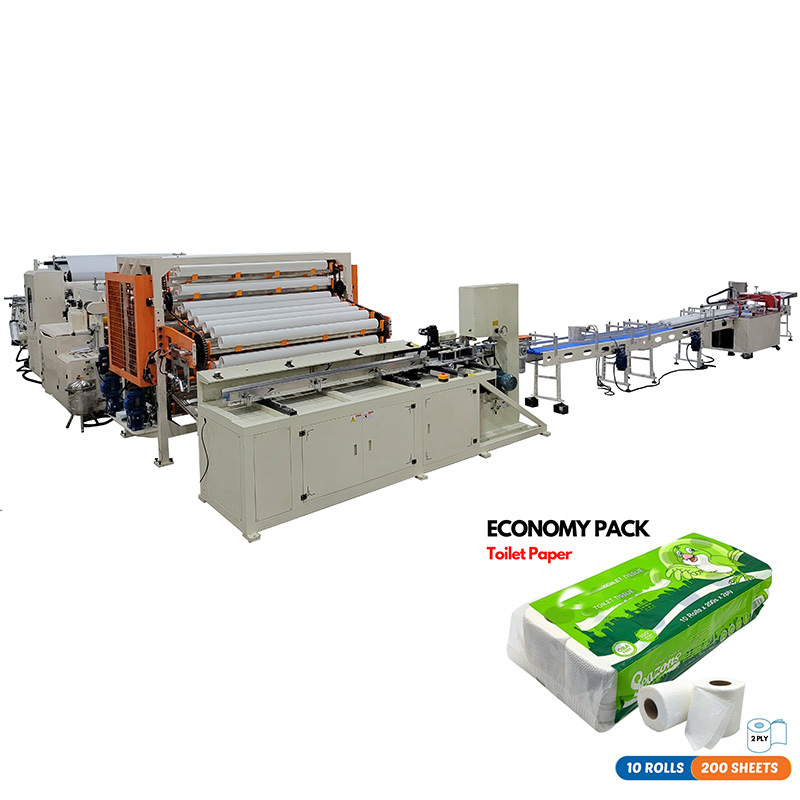
3.2 Fully Automatic Lines
-
Features:
-
Fully automated from parent roll to finished product.
-
Output capacity: 800–1,200 pieces/min.
-
Integrated PLC control and HMI touchscreen for user-friendly operation.
-
Application: Large factories or mass production.
3.3 Specialty Lines
-
Creping Production Lines:
-
Uses creping technology to enhance paper fluffiness and absorbency by 30%.
-
Suitable for premium medical or hospitality markets.
-
Wet-Strength Production Lines:
-
Adds wet-strength agents to maintain paper strength in wet conditions.
-
Commonly used in kitchen or industrial cleaning scenarios.
4. Technological Innovation Trends
4.1 Smart Upgrades
-
AI-powered visual inspection systems monitor quality defects in real time during embossing and folding.
-
IoT-enabled remote equipment maintenance and production data analytics.
4.2 Green Manufacturing
-
Energy-efficient motors and waste heat recovery systems reduce energy consumption by >20%.
-
Supports biodegradable material processing to meet environmental regulations.
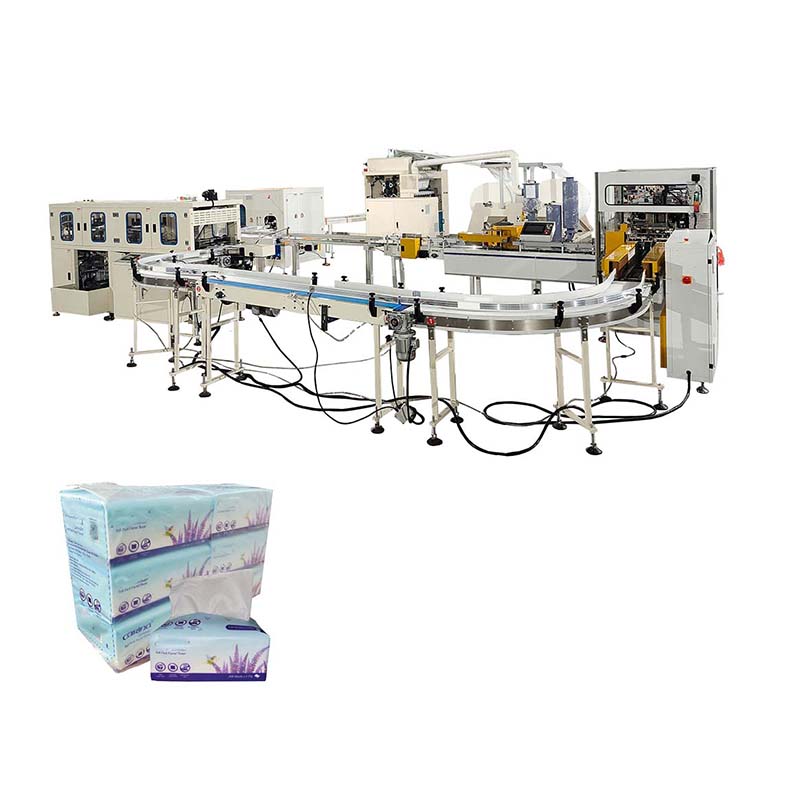
4.3 Multi functional Integration
-
Develops "all-in-one" machines capable of producing hand towels, facial tissues, and toilet paper simultaneously.
-
Modular designs allow rapid product specification changes.
5. Conclusion
As a core component of the hygiene products industry, hand towel production lines directly impact product quality and market competitiveness. Future developments will prioritize efficiency, sustainability, and flexibility to meet evolving demands. Enterprises must stay abreast of technological trends and optimize equipment configurations to gain a competitive edge in the market.

 Tel: +86-18650016302
 Email: sunny@xinyun-engine.com
 MP/WhatsApp: +86-18650016302
 Manufacturer Address:1610 Enterprise Building,Wanan,Luojiang,Quanzhou,Fujian,China